
Author: AFHE Team

Cline Op-Ed: Emulating European Healthcare Won’t Win America the Biotech Race

Republicans Want to Flip the Script on Health Care
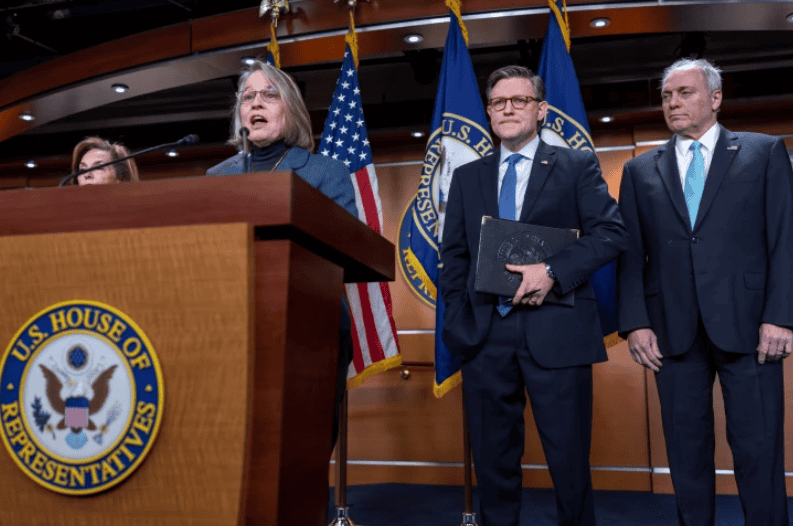
Congress Doesn’t Need to Wait: Six Bills That Can Lower Patient Costs Now

President Trump has already proven that real progress on lowering prescription drug prices is possible, with American patients now seeing the steepest decline in prescription drug prices in over 60 years. TrumpRx and Most Favored Nation agreements are delivering savings to patients today, not years from now. But lowering the cost of a prescription is only part of the equation. Patients are also fighting insurers who deny and delay care, hospitals that hide their prices, and a global trading system that lets other countries free ride on American medical innovation.
The good news is that Congress does not need to wait for a sweeping overhaul to make a difference. There are bipartisan, common-sense bills right now that would deliver real relief for American patients.
Here are six that deserve a vote.
The Every Dollar Counts Act of 2026
Lead sponsor: Rep. Greg Murphy (R-NC-03), a practicing urologist.
What it does: The Every Dollar Counts Act (H.R. 8270) requires that cash-pay credits and manufacturer copay assistance count toward a patient’s deductible and out-of-pocket maximum. Right now, many insurers and their pharmacy benefit managers use accumulator adjustment programs to pocket the value of that assistance instead of passing it to the patient.
The problem it solves: A patient managing a chronic condition might use TrumpRx or another cash-pay platform to buy a prescription for less than their insurance would charge. Under current practice, that purchase often doesn’t count toward the patient’s deductible or out-of-pocket maximum, even though they paid for the medication themselves. The patient ends up paying twice: once for the drug, and again through premiums that assume they’re accumulating credit toward that deductible. This fix requires insurers to credit cash-pay purchases like any other qualified expense.
Impact on patients: Every dollar a patient or a manufacturer puts toward a prescription would actually count. Patients would reach their deductible and out-of-pocket maximum the way the plan design intended, instead of watching that assistance disappear into insurer and PBM margins.
Real world implications: National polling shows 83% of voters support requiring cash-pay credits to count toward deductibles and out-of-pocket maximums, with strong majorities across party lines.
The Safe Step Act
Lead sponsors: Rep. Rick Allen (R-GA-12) and Rep. Lucy McBath (D-GA-6) with a Senate companion led by Sen. Lisa Murkowski (R-AK).
What it does: The Safe Step Act (H.R. 5509 / S. 2903) requires employer-sponsored health plans to establish a clear, timely exceptions process for step therapy, the practice of requiring a patient to try and fail an insurer-preferred drug before covering the medication their doctor originally prescribed. Plans would have to grant an exception when the required drug has already failed, is expected to be ineffective, is medically contraindicated, or would cause harm through delay. Plans must respond within 72 hours for standard requests and 24 hours when a patient’s life is at risk.
The problem it solves: Step therapy, often called “fail first,” can force a patient to cycle through medications that a physician already knows will not work, simply because an insurer says so. For patients managing conditions like rheumatoid arthritis, inflammatory bowel disease, migraines, or other painful or aggressive diseases, that delay is not just a paperwork inconvenience. It can mean irreversible disease progression and significant pain.
Impact on patients: This bill puts the doctor-patient relationship back at the center of treatment decisions. It does not eliminate step therapy as a cost management tool. It simply requires a real, timely off-ramp when following the protocol would hurt the patient rather than help them.
Real world implications: More than three dozen states have already passed similar step therapy exception laws, but those protections do not reach the self-insured employer plans that cover a large share of American workers because those plans are regulated at the federal level. The Safe Step Act closes that gap. It has also drawn support from more than 200 patient and provider organizations, from the National Psoriasis Foundation to the Arthritis Foundation.
In a prior Congress, I was proud to help lead this fight in the House myself, because I have seen firsthand what it costs a patient to wait on a treatment that was working for something a spreadsheet said to try first.
The Prices on the Wall Act
Lead sponsor: Rep. Mariannette Miller-Meeks (R-IA-1), a physician.
What it does: The Prices on the Wall Act of 2026 (H.R. 9390) requires hospitals and ambulatory surgical centers to physically post their prices in visible areas where patients can see them before receiving care. It builds on existing federal price transparency rules by converting the requirement to post prices online into a requirement that prices are visible in the facility itself. The bill advanced out of the House Energy and Commerce Committee’s Health Subcommittee this year to the full Energy and Commerce Committee, where it now awaits a vote.
The problem it solves: Hospital price transparency rules exist on paper, but patients rarely see the number that matters before they receive care. Prices are often buried in machine-readable files on a hospital’s website, not in a format any patient standing at the front desk can actually use.
Impact on patients: A patient facing a routine procedure or an urgent care visit deserves to know what they are going to pay in the same way they would buying groceries. Posting prices where patients can actually see them helps people compare costs, plan for expenses, and make informed decisions about where to seek care.
Real world implications: National polling shows voters want accountability across the healthcare system. 92% of voters favor requiring hospitals and insurers alike to provide real prices upfront, with support crossing party lines: 94% of Democrats, 92% of Independents, and 91% of Republicans. Hospitals and surgical centers shouldn’t be exempt from the same transparency voters demand insurers are being asked to provide.
The USTRx Act
Lead sponsor: Rep. Jodey Arrington (R-TX-19), Chairman of the House Budget Committee, with a Senate companion led by Sen. Tim Sheehy (R-MT).
What it does: The USTRx Act (H.R. 4780 / S. 5265) creates a new Chief Pharmaceutical Trade Negotiator within the Office of the U.S. Trade Representative to hold foreign countries accountable when their price control regimes force American patients to subsidize global drug innovation. For decades, other wealthy countries have set artificially low prices for the same medicines Americans pay full price for, effectively letting their citizens ride on the research and development American patients and companies fund.
The problem it solves: Foreign exploitation is not an abstract trade grievance. It is a direct driver of what Americans pay at the pharmacy counter. When a manufacturer cannot recoup its research investment overseas because a foreign government has dictated an artificially low price, that manufacturer looks to the American market to make up the difference.
Impact on patients: By giving trade negotiators real leverage to push other wealthy nations toward fairer pricing, this bill aims to shrink the gap between what Americans pay and what the rest of the developed world pays for the exact same medicine, without resorting to the kind of government price controls that choke off future cures.
Real world implications: National polling shows 72% of voters agree it is time to get other countries to pay their fair share, including near-universal support among Republicans and majority support from Independents and Democrats alike. This is a rare issue where voters across the spectrum agree that the solution is trade policy, not price controls.
The Help Ensure Lower Patient (HELP) Copays Act
Lead sponsors: Rep. Thomas Kean Jr. (R-NJ-7) and Rep. Nanette Barragán (D-CA-44), with a Senate companion led by Sen. Roger Marshall (R-KS), a physician, and Sen. Tim Kaine (D-VA).
What it does: The HELP Copays Act (H.R. 6423 / S. 864) requires health plans and their PBMs to count copay assistance, whether it comes from a drug manufacturer or an independent entity, toward a patient’s deductible and out-of-pocket maximum.
The problem it solves: A patient managing hemophilia, multiple sclerosis, or a rare disease often depends on a manufacturer coupon or a nonprofit foundation grant to afford their prescription each month. Many insurers and PBMs accept assistance at the pharmacy counter. However, they don’t include it in a patient’s deductible calculation. The patient ends up paying twice—once through the assistance that was supposed to help them, and again through a deductible that was never credited for it. This fix requires health plans to count that assistance the same way they’d count a payment straight from the patient’s own pocket.
Impact on patients: Patients who rely on manufacturer coupons or nonprofit assistance to afford medication for conditions like hemophilia, multiple sclerosis, and cancer would finally see that help count. Every dollar of it would go toward their deductible and out-of-pocket maximum, the way it’s supposed to.
Real world implications: More than 25 states have already passed laws requiring copay assistance to count, most with near-unanimous support.
The PBM Price Transparency and Accountability Act
Lead sponsors: Sen. Mike Crapo (R-ID), Chairman of the Senate Finance Committee, and Sen. Ron Wyden (D-OR), Ranking Member, with nearly 20 bipartisan cosponsors.
What it does: The PBM Price Transparency and Accountability Act (S. 3345) targets the PBMs that sit between manufacturers, insurers, and pharmacies. It delinks PBM compensation in Medicare Part D from a drug’s list price or rebate value, moving PBMs to flat, transparent service fees instead of a payment structure that rewards them for favoring higher-priced drugs. It bans abusive spread pricing in Medicaid, where a PBM charges the state more for a drug than it actually reimburses the pharmacy and pockets the difference, and it requires transparent, pass-through pricing in state Medicaid contracts. The bill also modernizes pharmacy access standards under Medicare.
The problem it solves: PBMs were created to negotiate lower drug costs on behalf of health plans, but their compensation structures often do the opposite. When a PBM earns more by steering patients toward a higher-priced drug, or by pocketing the spread between what it charges a state and what it pays a pharmacy, patients and taxpayers absorb the cost. Independent and rural pharmacies, often reimbursed below their own acquisition cost, are being driven out of business in the process.
Impact on patients: By removing the financial incentive for a PBM to favor expensive drugs and shining a light on Medicaid spread pricing, this bill aims to bring prices at the pharmacy counter closer to what a drug actually costs, not what a middleman can extract from the transaction. It also helps protect the community pharmacies that seniors and rural patients depend on.
Real world implications: This bill has significant bipartisan support, introduced jointly by the Chairman and Ranking Member of the Senate Finance Committee with roughly 20 cosponsors from both parties. It reflects a growing consensus in Congress, that PBM compensation structures need to change. Every actor in the healthcare system, insurers, PBMs, hospitals, and drug companies alike, should be held accountable for what patients pay, and this bill puts that principle into law for two of the country’s largest drug programs.
Congress Has the Tools. It Should Use Them.
None of these bills require Congress to reinvent the healthcare system. They require Congress to pass targeted, bipartisan fixes that are already written, already have members willing to lead them, and already have the kind of broad public support most legislation only dreams of. President Trump has shown that voluntary, market-based reform can deliver real savings. Congress can build on that progress today, one bill at a time.
Germany Must Pay Its Fair Share for Medicines Americans Are Subsidizing
Americans for Health Excellence (AFHE) Executive Director Dr. Brad Wenstrup released the following statement after the U.S. Trade Representative hearing on foreign drug pricing practices, calling on Germany to stop shifting the cost of medical innovation onto American patients:
“For years, Germany has underpaid for American medicines that save lives, while American patients have quietly picked up a disproportionate share of the tab. The Trump administration is confronting that foreign exploitation head on. As a physician, I’ve seen firsthand what happens when patients can’t afford the medicines they need. For years, patients have wondered why their American made medicines are cheaper elsewhere. We don’t solve that problem by shifting even more of the burden onto American patients and innovators. It really comes down to wealthy countries like Germany finally paying their fair share.”
ABOUT AMERICANS FOR HEALTH EXCELLENCE
Americans for Health Excellence (AFHE) is a 501(c)(4) health policy organization dedicated to building a healthcare system that puts patients first — lowering costs, expanding access, and ensuring every American has the tools and information to make the best healthcare decisions for themselves and their families. AFHE advances market-based solutions while engaging all in the healthcare system on behalf of patient health.
For more information, visit AmericansforHealthExcellence.org.
Fox News: If Trump wants to lower drug prices, his obvious free-riding targets are outside the US

Wenstrup Op-Ed: American patients shouldn’t foot the bill for the world’s medicines

GOP candidates turn up the volume on lower health insurance costs

It’s Time for Insurers to Finally Answer to Patients

A doctor examines a patient, considers his or her health history, follows clinical guidelines, and recommends a course of treatment. Then an insurance administrator who has never met that patient, and may have no medical training, can deny a care plan, prioritizing the company’s bottom line over the person who needs care.
Too much of the American healthcare system runs on this broken formula, and patients are the ones who suffer—through higher costs, rejected care, and complicated, unachievable appeal processes. Patients belong at the center of every healthcare decision, not on the losing end of an insurance company’s spreadsheet.
I spent my career making medical decisions under pressure in clinics and on the battlefield. In neither setting could I hide behind paperwork or delay care while a patient waited for someone else to make the call. Patients came first, every time. But across the country, that’s no longer the norm. The destruction of the doctor-patient relationship is mostly because of government and insurance companies who have taken the joy out of taking care of patients.

The Cost Patients Feel Most
Health insurance is now the top healthcare concern for American voters, ahead of drug prices and hospital bills, according to a McLaughlin and Associates survey of 2,000 likely voters. That is not a surprise to anyone who has appealed claims or seen patients defer care because of cost or bureaucracy. That same survey found that 83% of voters say it is time for insurers and hospitals to do their part, which is a view shared by Republicans, Democrats, and Independents almost equally.
What Patients Are Actually Asking For
Americans are asking for the bare minimum: transparency. Americans want to know where their insurance premium dollars go in plain speak, not industry verbiage.
Picture a family opening their renewal notice and discovering that their premiums are going up 12% with no explanation. Basic disclosure requirements would give them a clearer picture of where that money is going, including whether the increase is funding patient care or adding to the insurer’s profits. Patients should have the same level of transparency from their insurance company that they already expect from a hospital bill.

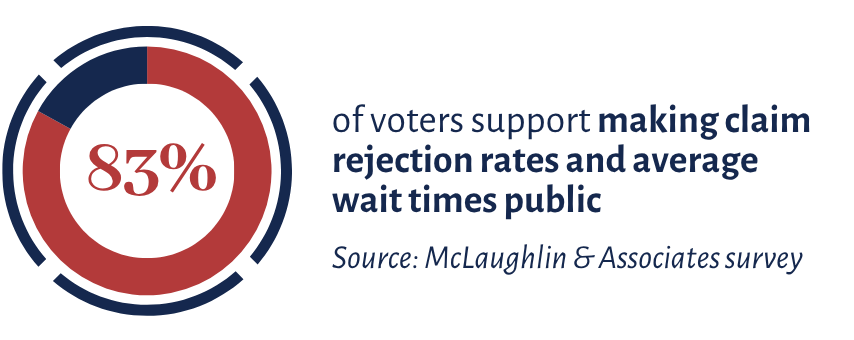
Americans also want to know how an insurance plan performs before they enroll. A patient comparing plans during open enrollment may have no way of knowing that one insurer denies claims at nearly twice the rate of another until her own claim is rejected. Requiring insurers to publicly share rejection rates and wait times would let her choose the proper plan before she needs care, rather than discovering its limitations when it is already too late.
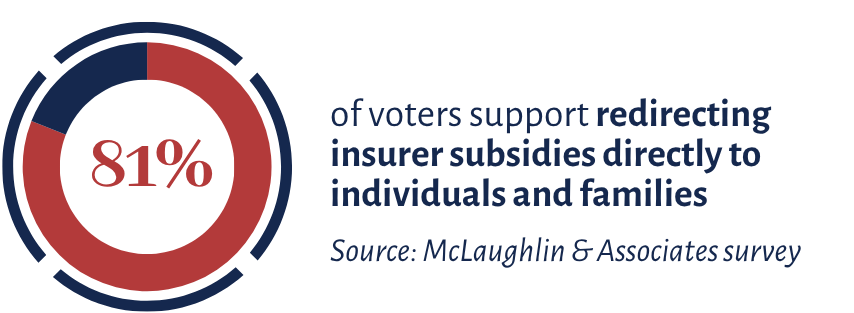
And Americans want their tax dollars supporting them directly, not padding an insurer’s bottom line. Consider a young family whose subsidy dollars go straight to an insurance company, whether that plan serves the family’s needs or not. If that money went to the family directly, they could choose the coverage that fits their needs, rather than the plan insurers already steer them toward.
The Bottom Line
Every part of the healthcare system has a role in fixing it. But patients and their doctors, not insurers focused on profit, are best equipped to decide what care looks like. Insurers have had their say for too long. It’s time patients had theirs. And it’s time America lived up to being the best place in the world to be a patient.
Trump’s Latest MFN Deals Mark Another Win for American Patients

Americans for Health Excellence (AFHE) Executive Director Dr. Brad Wenstrup today applauded President Trump’s announcement of nine new Most Favored Nation drug pricing agreements, bringing the total to 26 manufacturers covering 89 percent of the branded drug market. For years, Americans have been asking why their medicines cost less somewhere outside of America.
“For decades, foreign governments used price controls to exploit American innovation while American patients paid the difference. Fortunately, President Trump is closing that gap and making great strides toward ending foreign exploitation, deal by deal, ensuring other countries finally pay their fair share. This is delivering real savings patients can see right now. Americans for Health Excellence supports this work as it coincides well with the progress TrumpRx has already delivered toward greater affordability.”
ABOUT AMERICANS FOR HEALTH EXCELLENCE
Americans for Health Excellence (AFHE) is a 501(c)(4) health policy organization dedicated to building a healthcare system that puts patients first — lowering costs, expanding access, and ensuring every American has the tools and information to make the best healthcare decisions for themselves and their families. AFHE advances market-based solutions while engaging all in the healthcare system on behalf of patient health.
For more information, visit AmericansforHealthExcellence.org.